A construction and C&D dumpster suits a defined build or demo job rather than a light garage cleanout. A 10-yard bin holds about 4 pickup-truck loads and fits a single-bathroom gut or a small deck tear-off; a 40-yard…
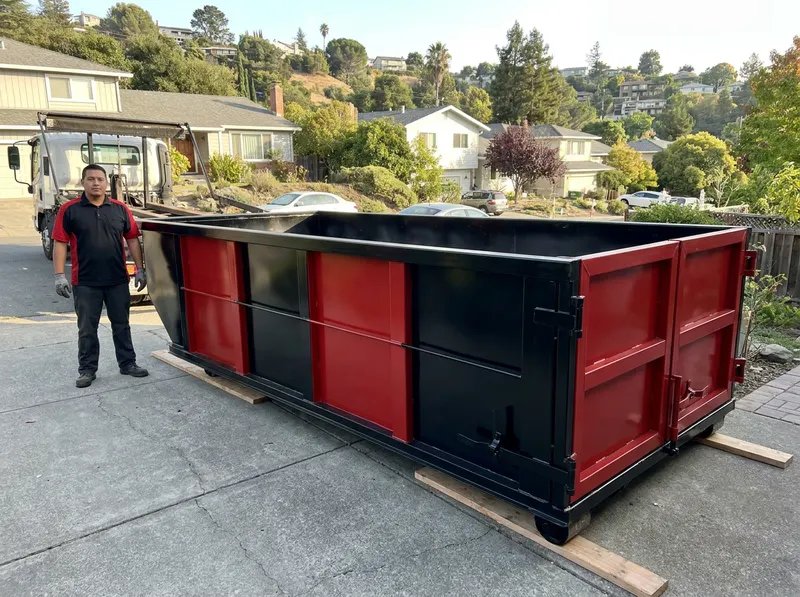
A construction and C&D dumpster suits a defined build or demo job rather than a light garage cleanout. A 10-yard bin holds about 4 pickup-truck loads and fits a single-bathroom gut or a small deck tear-off; a 40-yard bin holds roughly 16 pickup loads and matches a whole-house remodel or a full roof tear-off. The trade-off is straightforward as prose: a bigger bin needs more flat driveway or street length, so on a tight Montclair or upper Rockridge hill street the 15-yard or 20-yard often lands where a 40-yard cannot. Heavy debris changes the math - concrete, brick, dirt and asphalt weigh far more per cubic yard than framing, so a concrete-only load from a Fruitvale foundation cut goes in a smaller bin than the same volume of drywall. Naming the material when you call lets our team match the yardage before delivery.
Oakland's terrain drives the size decision more than the debris volume does. West Oakland and Maxwell Park have flatter lots and wider frontage that take a 30-yard or 40-yard on the street or a long driveway. The Dimond District, Laurel and the streets climbing toward Joaquin Miller Park and Redwood Regional Park run narrow with steep grades and blind curves, where a 10 to 20-yard drops cleaner and a driver can set it square on a slope. Grand Lake and Piedmont Avenue blocks near Lake Merritt often need a street placement, which can require an Oakland encroachment permit when the bin sits in the public right-of-way; a bin fully on your own driveway or lot usually does not. Confirm the placement spot before the truck arrives so the drop lands where you need it.
Booking a C&D bin runs in five plain stages. Step 1: call (510) 201-6044 with the Oakland address, the job type and the main debris material. Step 2: our team confirms the size and a flat all-in price against that address and its street access. Step 3: the bin is delivered inside an agreed window and set on boards where a driveway needs protection. Step 4: you load it over the rental period, keeping the load level with the top rail so it stays legal to haul. Step 5: we pick it up and haul the debris for disposal. C&D debris is not household hazardous waste - paint, solvents, asbestos and treated fuels are excluded and must go through Alameda County's StopWaste program and the county's household hazardous waste drop-off, not a construction bin.
Mixed C&D loads are heavily recyclable, which is why they are kept separate from general trash. The EPA reports construction and demolition materials make up a large share of the national waste stream, and concrete, metal, wood and clean gypsum are commonly diverted from landfill. California's CalRecycle sets diversion targets for C&D debris, and Oakland's building code follows the statewide CALGreen requirement to recycle a set percentage of jobsite waste. On active jobsites, keeping the loading zone clear supports OSHA construction safety housekeeping rules, and material reuse resources such as Earth911 and the Construction & Demolition Recycling Association track where salvage lumber and fixtures can go. Contractors quoting a project can size the bin against the room count or square footage and the flat price locks in at booking.
Every job gets a firm, written price after an on-site visit.
Tell us about your construction & c&d dumpsters job in Oakland and we'll send a clear, written quote, usually the same day.
 Joshua Dumpster Rental